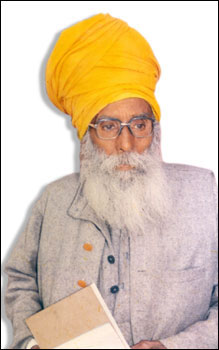
Patwant Singh was a famous Sikh writer, commentator, journalist, editer and publisher, as well as a frequent TV presenter. He was born in New Delhi on March 28, 1925. He grew up and carried out his school and University education in Delhi. He began his career in the family business of building and engineering but soon merged these interests with his love for writing. He started up his first periodical, The Indian Builder, in 1953 as publisher. In 1957, he unveiled his most influential journal, Design, the only magazine of its kind in the world at that time.
Design was a revolutionary magazine which brought together the latest thinking in the fields of architecture, urban planning, visual arts, graphics, and industrial design. Subject areas that, up to that point, had tended to have isolated audiences that rarely looked at or understood each other’s fields. The journal’s strongly interdisciplinary approach led Singh to begin pondering questions about why Bombay, Delhi and other urban areas in India were being developed in ways that ran counter to his aesthetic and humanitarian sensibilities. When he realized that the answers had less to do with architecture and more to do with politicians, government policies and corruption, he began publishing newspaper articles in the 1960s with the aim of affecting public opinion and official policies.
After 1984, Patwant Singh began to delve into Sikh issues, editing and contributing the opening essay of Punjab: The Fatal Miscalculation, which was published in 1985. The Golden Temple, published in 1989, aimed to be the definitive volume on the Harimandir Sahib and show how central this “fountainhead of inspiration” has been to Sikhs since its construction.
Of Dreams and Demons is Patwant Singh’s 1994 memoir, which highlights the intersections that connect his personal history to India’s history in the 1930s to the 1990s. He returned to the topics of religion and history with his 1999 publication, The Sikhs, a survey of Sikh history beginning with the historical context of South Asia before the time of the Gurus and stretching to the present day.
Garland Around My Neck was published at the beginning of March, 2001. It the remarkable Story of Puran Singh of Pingalwara. The book was co-written with Harinder Kaur Sekhon as a tribute to the remarkable humanitarian, Puran Singh who dedicated his life to sewa in order to bring a more healthy and humane world into existence. It is the real life story of Puran Singh (1904-92), a barefoot colossus who cared for the despairing, disabled and destitute with his own hands restoring to them the dignity of human existence that an uncaring society had denied them. After 23 years of personally caring for ever-increasing numbers of people who were unable to take care of themselves, in 1957, Puran Singh expanded his service to society by establishing Pingalwara, which now serves over 1,000 residents. Unlike a hospital, which has the aim of treating the sick, Pingalwara was built for people–disabled, poor, mentally ill, with terminal diseases–who needed hope and a home. Patwant Singh and Harinder Kaur Sekhon relied on Punjab’s rich tradition of oral history in researching this book.
Patwant Singh’s latest book is The World According to Washington: An Asian View, published in 2005. In this work, the author examines the often violent history of relations between western imperial powers and Asia, including East Asia, South Asia, and West Asia. His perspective is passionately critical of the destruction western interventionists have wrought in Asia, largely through valuing their own political and economic interests over the interests of Asians themselves–and by backing up these interests with firepower. First, Singh writes, there was a time when “Europeans considered the domination of Asia their birthright.”
Now, incursions of US troops, US-made arms, and coercive development plans are the strategies of the world’s only remaining superpower. When Washington, DC and those in its pocket write history and cover current events, their perspective is so imbalanced that the general public in the western world is now ignorant of even the most basic facts about Asia. The World According to Washington was conceived as a corrective and fills in the missing histories of US involvement and interests in hotspots such as—Iran, Indonesia, Korea, Vietnam, Laos, Cambodia, India and Pakistan.
Patwant Singh has also written extensively for newspapers and magazines and has appeared on both radio and television. His articles have appeared in many publications including the New York Times, Canada’s Globe and Mail, the UK’s Independent. Patwant Singh gave a lecture on July 22, 2006 at the Rubin Museum of Art in New York in conjunction with, I See No Stranger: Early Sikh Art and Devotion, an exhibition jointly sponsored by the Sikh Foundation and the Sikh Art and Film Foundation.
As Chairman of a family Trust, Patwant Singh established a unique rural medical facility in the state of Haryana in 1977. The Kabliji Hospital and Rural Health Centre is today acknowledged as a one-of-a-kind initiative in providing medical coverage and promoting preventive health in rural India. It was born out of Patwant Singh’s conviction that very little was being done for the medical and educational needs of the rural population in India, and that private initiative must play a role in providing these. A school was also founded next to the hospital a few years later. Both continue to flourish.
Patwant Singh will be remembered through his literary works and his charity.


 Snatam Kaur, born 1972 in Trinidad, Colorado, is an American singer and songwriter. She performs Sikh devotional music called kirtan and has toured around the world as a peace activist. She currently lives in Española, New Mexico with her partner Sopurkh Singh Khalsa. Kaur's family moved to California when she was was two, living in Long Beach and Sacramento. When Kaur was six, the family went to India where her mother studied Kirtan. Kaur lived on a ranch near Bolinas, California as an adolescent, playing kirtan with her mother in Sikh temples and attending Tamalpais High School in Mill Valley. While at Tam High, she played violin in the school orchestra and began songwriting. Bob Weir of the Grateful Dead coached her and her classmates before they performed her song Saving the Earth at an Earth Day concert in San Francisco. Snatam was also active in social and environmental causes while in high school, serving as president of the Social Action Club, which started a campus recycling program and organized environmenal awareness programs. The Club also led the effort to change the school mascot and sports team names from the Indians to the Red Tailed Hawk in 1990 and 1991. After graduating she attended Mills College in Oakland, California, receiving a bachelors degree in biochemistry. She then returned to India, to study Kirtan under her mother's teacher, Bhai Hari Singh. In 1997, Kaur began a career as a food technologist with Peace Cereals in Eugene, Oregon which is a company started by followers of the Sikh Dharma that donates 10% of its profits to peace causes. Snatam Kaur was nominated for a Grammy Award for her album Shanti(2004) in the new age category.
 Didar Singh Bains is known the as the peach king of California and is one of the richest Sikh farmers in North America. He arrived in America with just $8 in his pocket saw the potenital of land for farming in California and has now become one of the wealthiest men in Northern California, worth somewhere in the region of $50 million. Didar started out driving tractors and irrigating orchards for 75 cents an hour, he did the work of four men, and soon bought his first peach orchard. He bought another, then another, and by 1978, had become the largest peach grower in California. His first name roughly means "visionary" in Punjabi, today he owns more than 40 pockets of land in 13 counties, including 667 acres next to Sacramento International Airport and much of rapidly developing western Yuba City. He has always been a leading figure in the Sikh community for the last 20 years. Before 1983 he was the head of the North America Akali Dal. After the Blue Star Operation in Amritsar he became the president of the World Sikh organization. In 1985, he became the founder chairman of the World Kabbadi federation. He is also acknowledged as the founder of the Annual Sikh Parade in Yuba City where nearly 100,000 Sikhs come together is the largest gathering of Sikhs in America. He is also a member of the World Sikh Council.